


Layla-Voice Chat & Party Rooms
4.9885.00 Reviews
App Specs
- Version
- 2.10.0
- Updated On
- License
- Free
- Downloads
- 5,000,000+
- Developer
- GIRLPOWER HK LIMITED
- Categories
- Social
- Platform
- Android
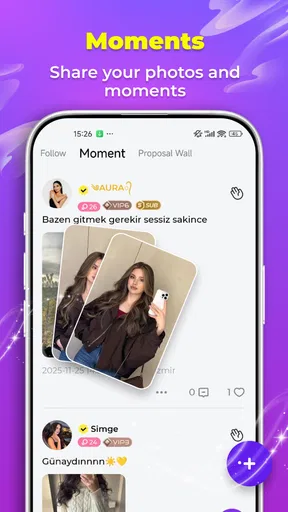
Screenshots






 Analysis by AppCompare
At first glance, Layla-Voice Chat & Party Rooms looks like the kind of social app you open for a quick conversation and then keep around because a room happens to feel lively. I spent time with it as a mobile social space rather than treating it like a simple messaging tool, and that distinction matters. Its appeal comes from immediate interaction: you can chat directly or enter voice party rooms where several people talk together in real time. That makes the experience more spontaneous than writing messages, but also more dependent on the quality and mood of the people currently online.
Layla is free to download and use, with optional in-app purchases ranging from $0.59 to $101.99 per item. It is published by GIRLPOWER HK LIMITED and is aimed at mature users, with a 17+ content rating. The app has reached over 5 million installs and holds a 4.9 average from around 50 thousand ratings, which suggests that its core audience finds the social format very appealing. My more cautious view is that a strong first impression is easy here; the real test is whether the rooms continue to offer something worth returning to after the novelty wears off.
What Layla feels like during the first week
The first thing I noticed was how quickly the app puts the social element in front of you. There is no need to wait for a carefully composed post or build a public profile before the format makes sense. The central idea is conversation, and voice rooms make that conversation feel more immediate than a normal text feed. If you enjoy dropping into a shared discussion, listening for a while, and deciding whether to participate, Layla has a natural rhythm.
That immediacy is also the reason the first few sessions can be surprisingly engaging. A voice room gives you more context than a short message: pauses, tone, laughter, and interruptions all change how a conversation feels. I found that useful when I wanted something more human than scrolling through updates. It can also suit people who dislike the pressure of one-to-one messaging, because a group setting gives you room to listen before speaking.
A realistic everyday use case would be a quiet evening after work. Instead of opening a video platform and passively watching, I could enter a room, hear what people were discussing, and decide whether to stay. On another day, a short chat could be enough before putting the phone away. That flexibility is one of Layla’s practical strengths: it does not require every visit to become a long social commitment.
The first-week experience depends heavily on finding rooms that match your mood. A lively room can make the app feel welcoming, while a conversation that is too loud, repetitive, or unfocused can make it feel disposable. This is not a flaw unique to Layla, but it is more noticeable in a voice-centered app because the quality of the room is immediately audible. Text-based communities give you more control over what to read and when to respond; voice rooms ask you to judge the atmosphere in real time.
Why the voice format changes the decision
Compared with conventional messaging apps, Layla is less useful when your main goal is to exchange precise information or maintain a clear record of a conversation. Voice is better for presence and spontaneity than for searching, rereading, or carefully editing your thoughts. If I needed to send instructions, arrange a specific plan, or keep an important detail easy to find, I would still choose a familiar messenger.
Worth Reading Before You Choose

Flipboard Shows What News Apps Must Do Beyond the Feed

Switching to Android Auto Means Rethinking Your Driving Routine

Google Calendar Makes a Crowded Week Easier to Manage

Ludo King Makes the Most of the Minutes Between Plans

Baby Panda World Brings Quick Play to Modern Phones, but Its Game Library Feels Busy

ESPN’s Live Game View Makes Following Close Games Easier
Compared with large social networks, Layla feels more focused on live interaction and less on building a permanent public feed. That can be refreshing because the app’s purpose is easier to understand. It can also feel narrower if you want photos, long-form posts, news, or a broad collection of content in the same place. Layla works best when you want people, not a general-purpose social dashboard.
One useful habit is to treat the first room you enter as a sample rather than a commitment. I would listen briefly, notice whether people are actually responding to one another, and leave without feeling obliged to stay. That small change prevents the common mistake of judging the whole app by one slow or uncomfortable room. It also makes the experience more intentional, especially for new users who are unsure how much participation is expected.
Who is likely to enjoy it
I would recommend Layla to adults who like casual conversation, do not mind meeting people through live audio, and enjoy social experiences that are less formal than scheduled calls. It may also suit someone who wants background company while relaxing, provided that person is comfortable with the unpredictability of public group conversations.
The 17+ rating should be taken seriously rather than treated as a decorative label. This is a social environment for mature users, and anyone who is uncomfortable with adult-oriented conversation or unknown participants should choose a more controlled platform. Parents looking for a general family chat app should not see Layla as the obvious option simply because it is easy to download.
I would skip it if you dislike speaking with strangers, need strict control over who can contact you, or prefer social apps where every interaction is asynchronous. It is also not the right replacement for a private group messenger. Layla’s value comes from open-ended interaction, and that same openness creates uncertainty about how useful or comfortable any particular session will be.
Does it keep earning a place after the novelty?
The month-to-month question is more complicated than the first-week question. A live voice app can become part of a routine when it consistently helps fill a specific social need: a short conversation during a break, a place to listen when you feel isolated, or a casual room to visit when you want interaction without arranging a call in advance. If Layla becomes associated with one of those moments, it has a chance to remain useful.
Its recurring value is not based on a fixed library of content. The experience changes with the people present, so returning users are really returning to the possibility of a good conversation. That can feel fresh, but it also means the app has to earn attention repeatedly. A room that was enjoyable one day may be quiet or unsuitable the next. I see this as both the app’s main attraction and its biggest long-term weakness.
For regular use, I would create a simple personal rule: open Layla with a purpose, even if that purpose is only to spend ten minutes listening. Without that boundary, social audio can turn into passive waiting, where you move between rooms hoping the next one will be better. The app is more rewarding when I decide what I want from the session before entering: conversation, company, or a quick look at the current atmosphere.
Another practical approach is to avoid measuring success by how long you stay. A short, pleasant exchange can justify opening the app just as much as a long session. This matters because live social products often encourage lingering through the promise that something interesting may happen soon. I found Layla easier to keep as a healthy habit when I treated it as an optional social stop rather than a place where I had to remain until the activity improved.
How optional spending affects long-term use
Layla is free, which lowers the barrier to trying it, but the presence of in-app purchases changes how I would approach the app over time. The available items span from small purchases to substantially larger ones, so I would decide in advance whether I am willing to spend at all. The safest way to evaluate the service is to use its free experience first and judge whether the conversations themselves provide enough value.
I would not buy anything simply because a room feels exciting in the moment. Live social environments can create a strong sense of urgency, especially when attention is moving quickly and other participants appear active. Waiting before spending gives you a clearer answer: are you paying for something that genuinely improves your experience, or reacting to the atmosphere of one session?
This is particularly important for anyone who wants Layla to become a lasting, low-cost habit. A free app can still become expensive if optional purchases are treated as part of every visit. My recommendation is to regard spending as an extra choice, not as the price of belonging. If the free interaction is not enjoyable, purchases are unlikely to solve the underlying problem of finding compatible conversations.
The maintenance burden is mostly social
Layla does not demand the same kind of maintenance as an app built around detailed personal organization. The harder work is social judgment: deciding which rooms deserve your time, when to participate, and when to leave. That may sound minor, but it becomes important after the initial curiosity fades. The app does not remove the effort involved in finding people you actually enjoy hearing from.
I also had to maintain my own boundaries. Voice interaction can feel more personal than text, even when the participants are strangers. I would avoid sharing information that identifies where I live, work, or spend time, and I would leave a room if the tone became uncomfortable. Those are not reasons to reject Layla; they are part of using any open social audio space responsibly.
The app’s current version is 2.10.0 and it supports devices running Android 6.0 or later. That broad compatibility makes it accessible to people using older Android hardware, although the quality of the experience will still depend on the device, connection, and the surrounding room activity. I would keep the app updated through the normal store process, especially for a service built around live communication, but I would not expect an update alone to fix a quiet room or an uninteresting conversation.
For someone who wants a polished private communication tool with predictable contacts, this maintenance burden may feel unnecessary. A standard messenger is easier to manage because your social circle is already defined. Layla asks you to curate your own experience from what is available at the moment, which is more flexible but less dependable.
Where fatigue begins
The first source of fatigue is repetition. If the same conversational patterns appear frequently, the live format can stop feeling spontaneous and start feeling like background noise. The app’s basic idea remains clear, but clarity is not the same as depth. I would need enough variety in the rooms and enough meaningful participation to keep opening it regularly.
The second source is uneven attention. In a group voice room, some people naturally speak more than others. A newcomer may find it difficult to enter the conversation, particularly when several participants already know one another. Layla can be enjoyable for listeners, but anyone expecting every room to welcome active participation may become frustrated.
The third is the emotional cost of unpredictable social spaces. A text feed lets me skip content silently; a voice room can make an uncomfortable mood feel more immediate. Even when nothing is seriously wrong, a tense or chaotic room can leave a worse impression than a boring page of posts. I recommend leaving early instead of trying to rescue a room that does not suit you.
There is also a broader trade-off between discovery and control. Layla’s open-ended format makes unexpected conversations possible, but it cannot guarantee that those conversations will be useful, kind, or interesting every time. A private group on a familiar messenger is better when trust and consistency matter most. A large established social network may be preferable when you want more content types and stronger control over what appears in your feed. Layla is the better choice only when live, casual voice interaction is the specific experience you want.
My long-term verdict on Layla
After the first burst of curiosity, I think Layla earns a place on a phone for the right kind of user, but not as a universal social replacement. Its strongest quality is immediacy. Entering a voice party room can feel more alive than scrolling, and the low entry cost makes it easy to test without committing to a subscription. The high average rating and broad install base also show that the format has found a substantial audience.
My recommendation comes with conditions. Use it when you want casual live company, keep your personal boundaries clear, and judge rooms by the quality of the interaction rather than by how busy they look. Do not assume that every session will be rewarding, and do not spend money to compensate for a weak social fit. The app is at its best when it adds a small, enjoyable moment to your day instead of demanding to become your main online community.
Layla is worth keeping if live voice conversation genuinely improves your routine; it is easy to remove if you only open it out of habit and rarely find a room that feels worthwhile. That is the lasting test I would apply after the novelty fades. For adults who enjoy spontaneous group talk, it can become a pleasant recurring stop. For users seeking privacy, predictability, detailed messaging, or a family-friendly environment, another type of social app will serve them better.
In the end, I see Layla as a focused social experiment that succeeds when the human chemistry is right. It does not need to replace every other communication tool, and it should not be judged as though it were a conventional messenger. Its future value depends on whether you can repeatedly find conversations that fit your mood without spending too much time searching. If that happens for you, the app has a convincing reason to stay installed; if not, its first-week appeal will probably remain its strongest feature.
Pros
- Easy voice-room setup for casual conversations and group hangouts.
- Live interaction feels more engaging than text-only community apps.
- Useful discovery tools help find rooms matching different interests.
- Room hosts can create a focused atmosphere with moderation controls.
- Works well for spontaneous chats without requiring lengthy profiles.
Cons
- Public rooms may include disruptive users or unpredictable conversations.
- Voice quality can vary noticeably with weak mobile connections.
- Busy rooms can feel overwhelming for users who prefer smaller groups.
- Privacy depends heavily on the room’s audience and account settings.
- Frequent live activity may consume more battery and mobile data.
FAQs for Layla-Voice Chat & Party Rooms
What is Layla-Voice Chat & Party Rooms used for?
Layla-Voice Chat & Party Rooms is a social communication app focused on live audio conversations. It allows users to join or create virtual party rooms, talk with other participants using voice chat, and discover communities based on shared interests. Depending on the available features and region, rooms may also include text messaging, social interactions, games, or virtual gifts.
Do I need an account to use Layla-Voice Chat & Party Rooms?
An account is generally required to access the main social features, such as joining rooms, creating a profile, speaking in voice chats, and interacting with other users. Registration may be available through a phone number, email address, or a supported social login. Before signing up, review the permissions requested and avoid sharing personal information publicly in your profile or conversations.
Is Layla-Voice Chat & Party Rooms safe for teenagers and younger users?
The app is designed around communication with people you may not know, so users should consider privacy and moderation carefully. Voice rooms can contain user-generated conversations that are not always predictable or suitable for children. Parents should check the app’s age rating, privacy settings, reporting tools, and supervision options. Never share your address, school, passwords, financial details, or private photos.
Does Layla-Voice Chat & Party Rooms cost money to use?
Downloading and using the basic chat-room functions may be free, but the app can include optional purchases, subscriptions, coins, or virtual gifts. These features may be used to support hosts, unlock digital items, or improve profile visibility. Check the current pricing shown in the app store and review your device’s purchase restrictions, especially if multiple people use the same payment account.
What permissions and privacy considerations should I check before downloading it?
Because Layla-Voice Chat & Party Rooms relies on live audio and social interaction, it may request access to the microphone, notifications, and possibly storage or account information. Grant only permissions that are necessary for the features you intend to use. Read the privacy policy to understand how profile data, voice activity, messages, and usage information are collected, stored, and shared.


